
AI Clog UK Public Bodies: Why Chatbot Complaints Are Swamping Councils and MPs
AI clog UK public bodies are now dealing with is a strange new problem: chatbots make it easy for anyone to write a polished complaint in minutes, but each one still takes a human hours to read. And those complaints are arriving in floods.
A new Guardian report, published on November 8, 2026, describes councils, MPs’ offices, employers, lawyers, and schools all struggling with the same thing. The AI clog UK public bodies describe is one of the most practical AI stories of the month. Here’s what’s happening, why it matters, and what could be done about it. Every figure below comes from that reporting, which you can read in full in The Guardian’s original article. For more stories like this, see our AI News & Updates section.
Table of Contents
What Is “AI Clog” and Why Is It Happening?
“AI clog” is the name commentators have given to organisations getting jammed up by AI-written letters, emails, complaints, and legal challenges. Researchers have a more technical label for the deliberate version: “agentic flooding”, which means bombarding public bodies with AI-generated requests. You can read more about that research in this report on agentic flooding.
The cause is simple. A few years ago, objecting to a planning application or writing a formal complaint took research, time, and sometimes specialist knowledge. Now ChatGPT, Claude, Copilot, Gemini, and similar tools give people a free adviser who can draft all of it. That’s genuinely helpful for many people. The trouble is the sheer volume landing on teams that haven’t grown. That’s the core of the AI clog UK public bodies are reporting.
AI Clog UK Public Bodies Are Feeling: The Numbers
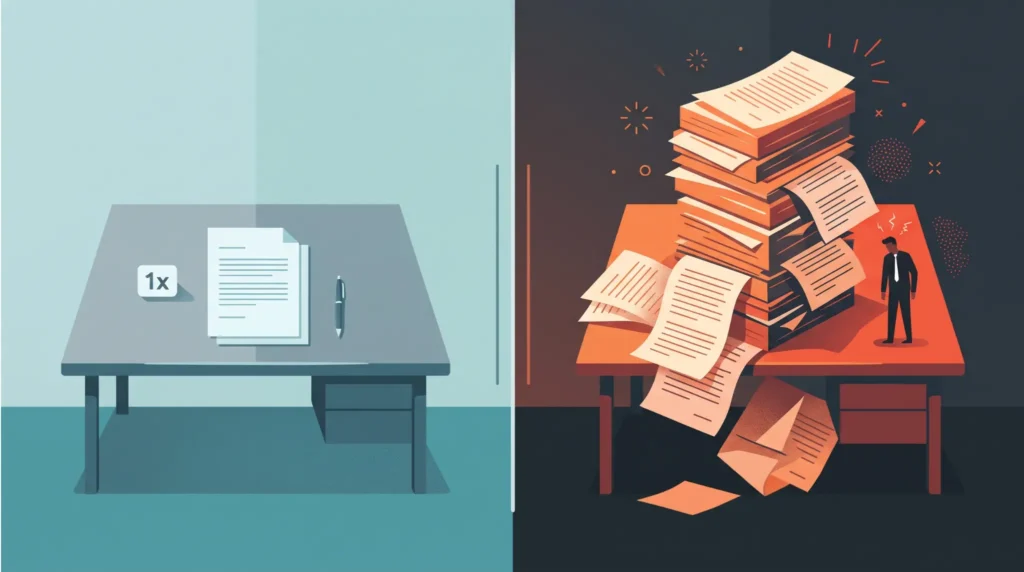
The Guardian piece pulls together a lot of specifics:
- MPs’ offices: one senior caseworker says roughly half the emails her office receives involve AI, up from a trickle in 2024. The GMB union says that where offices track casework, it has doubled or more.
- Local councils: Deborah Evans of Lawyers in Local Government says complaints used to average about two pages. Most are now around ten times longer, and she knows of one that ran about 200 pages.
- Transport for London: it received a record 4,769 freedom of information requests in 2025-26, a 5% rise on its previous peak, and it has flagged more appeals that appear AI-generated.
- Employment tribunals: claims opened between April and June jumped 28% from a year earlier to 14,000 single-claimant cases, with 70,000 open single claims at the end of June.
These aren’t all caused by AI, and the article doesn’t claim they are. But the people on the receiving end say AI is making each case heavier to handle, and the AI clog UK public bodies describe shows up in every sector the report covers.
Why the AI Clog UK Public Bodies Face Is So Slow to Clear

Length is only part of it. According to the report, AI complaints often have other problems that slow people down:
- Legal-sounding claims that don’t fit. Evans says tools tend to treat a complaint like a legal case, citing statutes and case law that may come from another country, such as Canada.
- Made-up details. AI can hallucinate, so staff have to check claims instead of taking them at face value.
- No clear ask. An employee-relations expert quoted in the piece says many AI complaints sound intimidating but forget to say what outcome the person wants.
- Exaggeration. Minor incidents can be framed as serious offenses.
The Information Commissioner’s Office adds an important point: even a long, repetitive, or inaccurate request still has to be answered by a human.
The Human Cost Behind the AI Clog UK Public Bodies Face
This isn’t just a paperwork story. The head of office for one Labour MP says her staff are “exhausted” and working more hours than they’re paid for. Her office has stopped replying to automated “click to email your MP” campaigns so it can focus on real constituents.
Money matters too. Evans notes that councils have one pot of funding and don’t get extra cash for extra complaints, so every pound spent on handling complaints is a pound not spent elsewhere. One start-up founder in the report expects to spend £30,000 in legal fees defending a tribunal claim, and says it feels like “everyone’s got a free lawyer now.”
The Fair Counterpoint on AI Clog UK Public Bodies: AI Also Helps People

It would be wrong to paint every AI-assisted complaint as junk. The report itself notes that AI can help people who struggle to write formal letters, and that these tools are turning laypeople into something closer to experts. Good complaints are valid, and sometimes councils really did get it wrong.
The challenge is separating a well-supported complaint from an inflated one without shutting out people who genuinely need help. That’s a hard balance, and the article doesn’t claim there’s an easy fix. Solving the AI clog UK public bodies face means protecting that access.
How UK Organizations Are Responding to AI Clog
The ideas floating around include:
- Limits and templates. Some ombudsman services are now setting word limits or using online templates to restrict how much people can attach.
- AI to fight AI. Wiltshire council is exploring tools that summarize long emails and draft first replies, and a Stroud district council committee has discussed using Microsoft Copilot. Evans warns this risks “losing the human touch.”
- Friction and fees. Researchers have suggested making applications harder, charging fees for requests, or blocking bots from government sites. Each option comes with a cost to access.
- Government guidance. UK civil servants have been told to verify facts, avoid entering personal data, and make sure humans review and decide.
Technology journalist Jamie Bartlett says clearing the AI clog UK public bodies are stuck with may need some form of AI filtering or stricter rules, or they risk being overwhelmed.
What the AI Clog UK Public Bodies Report Means for You
Whether you’re a customer, a student, or a business owner, a few practical lessons come out of this:
- If you use AI to write a complaint: keep it short, state exactly what outcome you want, and double-check every fact and law it cites. A tight, accurate letter gets read; a 20-page one may not.
- If you run a business or team: expect more long, AI-polished messages, and build a simple process for pulling out the actual request.
- If you follow AI trends: the AI clog UK public bodies face is a reminder that tools which save you time can create work for someone else.
Want to dig into how much we lean on AI advice? Read our piece on AI influence on expert decision-making, or browse our AI Tools collection.
The Bottom Line
AI clog UK public bodies are experiencing shows the other side of the productivity story. The same tools that help people speak up can also bury the people who listen. Fixing it will mean smarter systems, clearer rules, and keeping humans in the loop, without making it harder for ordinary people to be heard.
Source: The Guardian, “‘AI clog’: UK public bodies battle onslaught of chatbot-generated complaints”, November 8, 2026.