Sarvam AI Sovereign AI: Hidden Risks Behind India’s Big Bet on Avoiding a “Digital Colony”
Sarvam AI sovereign AI is the phrase behind one of the biggest tech questions in India right now. Can a single Bengaluru start-up help the country build its own artificial intelligence instead of renting it from Silicon Valley? A recent headline said India “pins hopes” on exactly that. Here’s a clear, no-hype explainer of the Sarvam AI sovereign AI push: who Sarvam is, what it has actually done, and what could go wrong.
A quick note: this is a background explainer built from public reporting and Sarvam’s own announcements. It is not a summary of any single newspaper article. For more stories like this, see our AI News & Updates section.
Table of Contents
What Does “Digital Colony” Mean for Sarvam AI Sovereign AI?
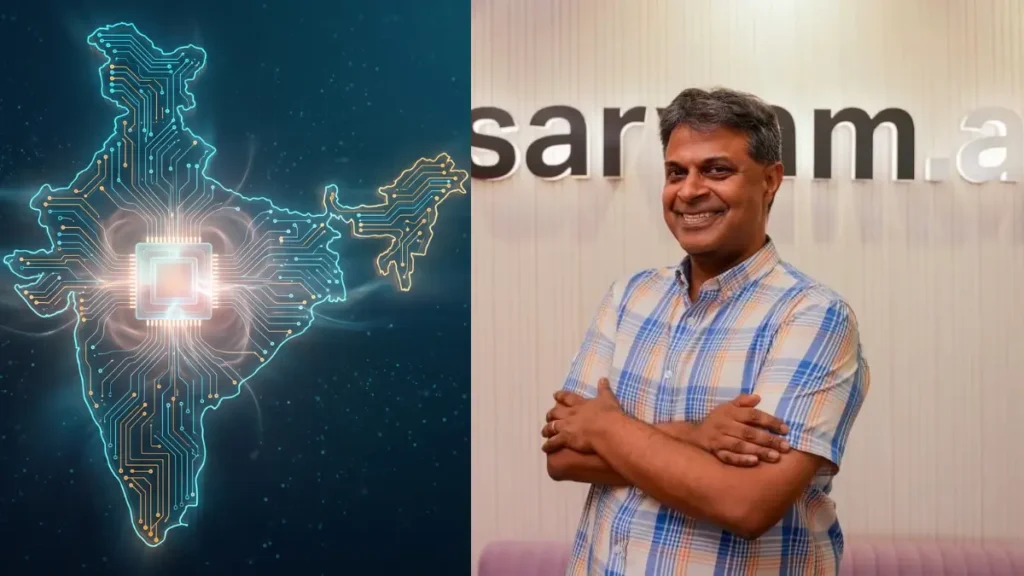
The phrase comes from Sarvam’s co-founder, Vivek Raghavan. Speaking at the India AI Impact Summit in February 2026, he argued that AI is a core technology touching every part of life, so India has to understand and build it from the ground up. His warning, as reported by ANI, was that otherwise India would depend on other countries for that core technology.
In plain terms: if most of India’s AI runs on foreign models, then foreign companies and governments control the prices, the rules, and the data. “Sovereign AI” is the opposite idea. It means models, tools, and computing power that a country can build and control itself.
Sarvam AI Sovereign AI: Who Is the Company?
Sarvam is a Bengaluru-based company that calls itself India’s full-stack sovereign AI company. Raghavan describes its platform as three pillars: models built in India, applications for everyday tasks, and the infrastructure to run them.
Here’s what’s on the record:
- Government backing: Sarvam was chosen under the IndiaAI Mission to build India’s first indigenous large language model.
- Open models: In February 2026 it released two large language models, a 30-billion-parameter one and a 105-billion-parameter one.
- Funding: In June 2026 it announced it had raised $234 million in the first close of a $300 million Series B, at a $1.5 billion valuation, with HCLTech investing $150 million as lead strategic investor, according to Sarvam’s own announcement.
- Defence: In October it signed a five-year agreement with the Headquarters Integrated Defence Staff to develop AI for the armed forces, per ELE Times.
Why the Sarvam AI Sovereign AI Story Matters for India
India has a special problem that global AI labs don’t always solve well: language. The country has dozens of major languages, plus dialects, accents, and people who speak or type a mix of two languages. Raghavan has argued that models trained on a lot of Indian data perform better on Indian languages and voices. That’s a claim from the company, so treat it as something to verify, but it’s the core pitch.
The second reason Sarvam AI sovereign AI matters is control. Governments and big enterprises often want AI that runs inside the country, on their own terms. Sarvam is selling exactly that: AI that organizations can own and operate themselves.
Sarvam AI Sovereign AI: The Latest Move Is a Big Hire From Google
On November 9, 2026, Sarvam named Sashikumar Sreedharan, formerly the head of Google Cloud India, as president and chief business officer. Business Today reports that he will join the board and oversee the company’s enterprise and government businesses.
The same report says more than 100 enterprises and government institutions are already building on Sarvam’s platform, and that, according to sources, the company is looking to raise fresh funding. In other words, Sarvam is shifting from launching models to selling them at scale.
The Hard Questions Behind the Sarvam AI Sovereign AI Hope
This is where the story gets more complicated. Hope is not the same as proof.
- Money: Sarvam’s reported Series B is about $300 million. By comparison, SoftBank alone has committed around $65 billion to OpenAI, according to the Financial Times reporting we covered in our piece on the SoftBank $7 billion loss. The gap in resources is enormous.
- Compute: Training and running frontier models takes huge amounts of chips and electricity. Building that capacity inside India is expensive and slow.
- Quality: Sarvam’s models are built for Indian languages and cost-efficiency, which is a smart niche. Whether they can match the best global systems on general tasks is a separate question that independent tests will have to answer.
- Customers: Winning government and enterprise contracts is a good sign. Turning them into steady revenue is the next test.
- One company’s job: Treating a single start-up as the country’s AI hope is risky. Sovereign AI will likely need many players, public infrastructure, and stable policy.
What Sarvam AI Sovereign AI Means for Everyday Readers
- If you’re a developer or founder in India: expect more Indian-language AI tools and APIs, and keep an eye on how Sarvam’s pricing compares with global options.
- If you work in government or a regulated industry: “AI that stays in the country” is becoming a real buying criterion.
- If you follow AI news: this is the other side of the global AI race, where the question isn’t just who has the best model, but who controls it.
Want to explore AI products available today? Browse our AI Tools collection.
The Bottom Line
The Sarvam AI sovereign AI story is a real attempt to give India a homegrown option in a field dominated by a few giant foreign labs. It has money, government support, and growing customers. It also faces a huge resource gap and a market that moves fast.
The honest answer to “can one start-up stop India from becoming a digital colony?” is: probably not alone. But Sarvam AI sovereign AI efforts can help show what’s possible, and that matters.
Sources: Sarvam AI’s Series B announcement, ANI/The Tribune, Business Today, ELE Times, and our earlier reporting, as of November 2026. Figures may change.