Abdul El-Sayed AI Regulation Plan: 7 Bold Steps (2026)
Quick Answer: The Abdul El-Sayed AI regulation plan proposes stronger public control over powerful AI companies, stricter safety rules, a pause on advanced AI development until safeguards are in place, and a government agency dedicated to AI oversight. The Michigan Senate candidate has outlined these ideas in two proposals: AI Under Democracy and AI Under Control. Other measures include public representation on AI company boards, an AI shutdown mechanism, restrictions on superintelligence, and financial support for workers affected by automation. These remain campaign proposals, not enacted federal law.
Artificial intelligence is no longer just a technology story. It is becoming a political one, too.
AI tools are already changing how people work, communicate, and access information. They also raise difficult questions about privacy, employment, misinformation, and who should be responsible when something goes wrong.
That is where the Abdul El-Sayed AI regulation plan enters the conversation.
El-Sayed, a Democratic candidate in Michigan’s 2026 US Senate race, believes powerful AI systems need stronger public oversight. His proposals go beyond ordinary safety rules. They would change how major AI companies are governed and give the government a bigger role in deciding which technologies can be developed and released.
Supporters see this as a way to protect the public before AI becomes harder to control. Critics may worry about government overreach, restrictions on research, and the impact on American technology companies.
So, what exactly does the plan involve? Let’s break down its seven major proposals and examine what they could mean in practice.
Table of Contents
What Is the Abdul El-Sayed AI Regulation Plan?
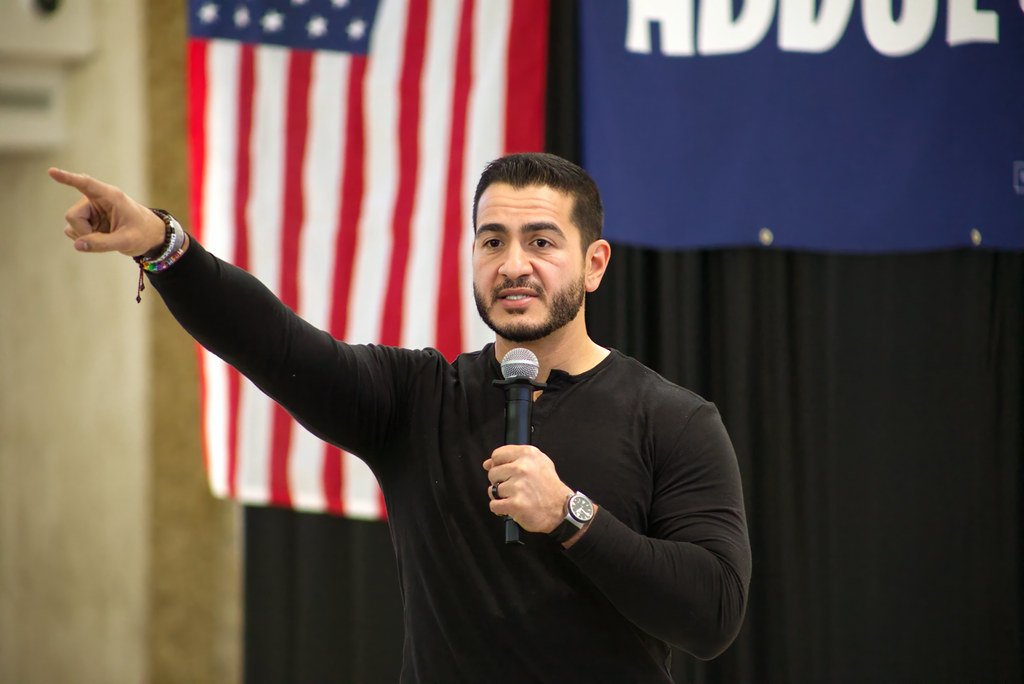
Abdul El-Sayed is a physician and Democratic Senate candidate in Michigan. His approach to artificial intelligence is influenced by a public-health perspective: powerful technologies should be developed responsibly, and preventing harm should be a priority.
The Abdul El-Sayed AI regulation plan has two main parts.
AI Under Democracy, announced on June 29, 2026, focuses on public ownership, corporate accountability, and democratic oversight of major AI companies.
AI Under Control, announced on October 13, 2026, focuses on the risks associated with advanced AI systems. It proposes a pause on frontier AI development, a ban on superintelligence, stronger safety oversight, and emergency controls for dangerous systems.
The campaign’s AI Under Democracy announcement outlines the first part. Its AI Under Control announcement describes the later safety-focused proposals.
Together, the plans address two connected questions: who should control powerful AI systems, and what rules should apply to their development?
The distinction matters because these proposals are not current federal regulations. They describe what El-Sayed wants policymakers to pursue if he gains the political support needed to advance them.
Seven Key Proposals in the Abdul El-Sayed AI Regulation Plan
1. Reduce Big Tech’s Control Over AI Companies
One of the most ambitious proposals would reduce the influence of major technology companies over frontier AI developers.
Large technology firms have invested heavily in artificial intelligence. These relationships can provide AI companies with funding, computing resources, and access to customers. However, El-Sayed argues that concentrated corporate influence could make it harder to put public safety ahead of commercial interests.
The Abdul El-Sayed AI regulation plan calls for major technology companies to divest specified holdings in frontier AI firms. The proposal aims to reduce the power of a small number of companies over the direction of advanced AI development.
Supporters may argue that AI is becoming too important to leave entirely in the hands of private shareholders. Critics may counter that forced divestment could disrupt investments, create legal disputes, and discourage future funding.
The details would be crucial. Policymakers would need to define which companies and investments qualify, how a transition would work, and what legal authority would support the requirement.
For now, divestment is a proposed policy, not an existing requirement.
2. Require AI Companies to Follow Public-Benefit Rules
The plan also proposes requiring major AI companies to operate under public-benefit charters.
A public-benefit structure is intended to make companies consider their impact on society alongside financial performance. In the context of AI, that could mean placing greater emphasis on safety testing, transparency, accountability, and the effects of technology on workers and communities.
The Abdul El-Sayed AI regulation plan would make public interest a formal part of how major AI companies are expected to operate.
That sounds straightforward, but the practical questions are more complicated. How would a company demonstrate that it was meeting its public obligations? Who would assess its decisions? What penalties would apply if it failed?
Without clear standards and meaningful enforcement, a public-benefit charter could become little more than a statement of intent. With strong legal requirements, it could create a more accountable framework for AI development.
3. Give the Public a Majority Role in AI Company Boards
This is one of the most controversial parts of the Abdul El-Sayed AI regulation plan.
El-Sayed proposes that more than half of the board seats at major AI companies be publicly appointed or democratically elected. The aim is to give ordinary people a greater say in decisions that could affect the wider economy and public safety.
Imagine an AI company preparing to release a powerful new system. Under the proposed approach, public representatives could have a formal role in the company’s governance rather than leaving the decision entirely to executives and shareholders.
Supporters argue that decisions about powerful AI systems can affect millions of people, including those who have no direct say in how the technology is built.
Critics may question how representatives would be chosen, whether they would have the technical expertise required, and how public board members would work alongside existing corporate directors.
The proposal would also need to distinguish between public representation on company boards and direct public ownership of company shares. These are related concepts, but they are not the same thing.
Whether the idea could work would depend on the legal structure, the authority given to representatives, and the safeguards used to keep the process transparent.
4. Pause Advanced AI Development Until Safety Rules Exist
Another major part of the Abdul El-Sayed AI regulation plan is a proposed pause on the development and release of the most powerful AI systems until adequate safeguards are established.
The idea is that AI capabilities may advance faster than the rules designed to manage their risks. A pause, according to the proposal, would give policymakers time to establish safety requirements before development continues.
El-Sayed has also called for a ban on artificial superintelligence and restrictions on recursive self-improvement. Recursive self-improvement refers to a process in which an AI system helps develop or improve increasingly capable versions of itself.
Supporters see these restrictions as a precaution against risks that could become difficult to reverse. Critics may worry that a broad pause could limit beneficial research, create enforcement problems, or place US developers at a disadvantage compared with companies operating elsewhere.
A workable policy would need to define exactly which systems are covered. It would also need clear testing standards, independent assessments, and a process for deciding when development could safely resume.
The difficult question is not simply whether AI development should slow down. It is how governments could identify unacceptable risks without unnecessarily blocking useful research.
5. Create an AI Kill Switch
The plan also proposes an emergency mechanism that could slow, suspend, or shut down dangerous AI systems.
The term “kill switch” sounds simple, but implementing one across modern AI infrastructure would be complicated. AI services can depend on cloud providers, connected applications, distributed systems, and multiple layers of computing infrastructure.
The Abdul El-Sayed AI regulation plan would require a way to intervene when powerful AI systems pose serious risks. It also discusses requiring cloud and data-center operators to restrict access to systems under lawful orders.
For such a mechanism to be effective, policymakers would need to answer several questions:
- Who would have the authority to order a shutdown?
- What evidence would be required before action was taken?
- How quickly would providers have to respond?
- How could authorities prevent misuse of emergency powers?
- How would a shutdown be verified across connected systems?
A shutdown mechanism could become one layer of a broader AI safety framework. It would not replace cybersecurity, independent testing, monitoring, or responsible development practices.
6. Establish a Cabinet-Level AI Safety Agency
El-Sayed also proposes creating a dedicated government agency to oversee AI safety.
The campaign has compared the idea to the role the Food and Drug Administration plays in evaluating and regulating products within its remit. The proposed AI agency would focus specifically on the risks posed by advanced AI systems.
Under the proposal, the agency could be responsible for:
- Inspecting AI laboratories.
- Evaluating models before deployment.
- Blocking the release of systems that fail required safety standards.
- Ordering pauses or shutdowns under defined conditions.
- Requiring reports of serious AI safety incidents.
- Protecting whistleblowers who disclose dangerous practices.
A dedicated regulator could help establish consistent rules and reduce the chance that AI safety becomes an afterthought.
However, creating an agency would not automatically solve the problem. Congress would need to establish its legal authority, funding, staffing, and relationship with existing regulators.
It would also need access to technical expertise and clear procedures for evaluating fast-changing AI systems.
The effectiveness of this part of the Abdul El-Sayed AI regulation plan would ultimately depend on how much authority the agency received and how independently it could operate.
7. Regulate Data Centers and Support Workers Affected by AI
AI policy is not just about software. The technology also depends on physical infrastructure, including data centers that consume electricity, use cooling resources, and affect surrounding communities.
El-Sayed’s proposals address concerns about local jobs, utility costs, environmental effects, and the pace of data-center development. His broader campaign platform has called for conditions on data-center construction, including local job guarantees and protections against higher utility costs for residents.
The Abdul El-Sayed AI regulation plan also proposes an automation levy on companies that replace workers with AI. Revenue from the levy could help fund an annual AI dividend, expanded unemployment benefits, wage insurance, and loans for small businesses.
The reasoning is that if AI produces substantial economic gains while changing or eliminating some jobs, workers and communities should share in those gains.
But the details would matter. Policymakers would have to determine which forms of automation qualify, how the levy would be calculated, and how the money would be distributed.
They would also need to consider whether the levy could affect hiring decisions, investment, and the adoption of technology that genuinely improves productivity.
These proposals reflect a broader concern: AI could create new opportunities, but the benefits and costs may not be distributed evenly.
Why AI Regulation Is Becoming a Political Issue
AI regulation is increasingly connected to familiar political debates about jobs, economic inequality, corporate power, and public safety.
El-Sayed’s proposals take a particularly interventionist approach. Rather than relying only on voluntary commitments from AI companies, he wants stronger public oversight and major changes to corporate governance.
Other policymakers prefer more limited regulation designed to address specific risks while preserving room for innovation. Some emphasize maintaining US leadership in AI, arguing that overly restrictive rules could slow research and investment.
The debate is not simply about whether AI should be regulated. It is about how much regulation is appropriate, who should enforce it, and how the benefits of AI should be shared.
The Abdul El-Sayed AI regulation plan also reflects concerns about data centers and local communities. A project may bring investment and employment, for example, while raising questions about energy demand, environmental effects, or local utility bills.
For more context on this political debate, read The Guardian’s analysis of El-Sayed’s AI proposals. You can also explore more coverage in our AI News & Updates section.
Is the Abdul El-Sayed AI Regulation Plan Realistic?
The plan is ambitious, but its proposals would not all face the same challenges.
Safety testing, incident reporting, and whistleblower protections could potentially be developed through legislation and regulatory frameworks. They would still require political support, funding, technical expertise, and clear enforcement powers.
Mandatory divestment and publicly controlled boards would raise more complicated questions about corporate governance, ownership rights, and the government’s authority over private businesses.
A pause on advanced AI development would present another set of challenges. Policymakers would need to identify the systems covered, determine which safety standards must be met, and establish a credible process for deciding when development could resume.
There is also the international dimension. AI development takes place across national borders, so restrictions in one country may not automatically prevent similar work elsewhere.
Supporters argue that these challenges are not reasons to avoid regulation. They believe governments should establish stronger safeguards before AI systems become more powerful and difficult to manage.
Critics may argue that some of the proposals could discourage investment, slow beneficial innovation, or give the government too much control over private research.
A balanced assessment should consider each proposal separately rather than treating the entire plan as one all-or-nothing package.
Some elements may prove easier to advance than others. The eventual outcome would depend on the legal details, political support, enforcement mechanisms, and the willingness of other countries to cooperate.
What Happens Next?
As of October 2026, the Abdul El-Sayed AI regulation plan remains a campaign platform rather than enacted federal law.
For any of its proposals to become binding policy, the candidate would need the political support required to advance legislation and establish the necessary regulatory framework. The process could involve congressional debate, amendments, funding decisions, and legal challenges.
The proposals have already placed an important question in the political conversation: should powerful AI systems be governed primarily by the companies that develop them, or should the public have a much greater role?
That question is likely to remain relevant as AI capabilities expand and governments consider how to manage their risks.
Whether every part of El-Sayed’s platform advances or not, the debate highlights a growing tension between technological innovation, public accountability, and economic security.
Key Facts Summary
| Detail | What the Proposal Says |
|---|---|
| Main Policy Platforms | AI Under Democracy and AI Under Control |
| Proposed By | Abdul El-Sayed, Democratic Senate candidate in Michigan |
| Corporate Ownership | Proposed divestment from specified AI holdings |
| Board Governance | Majority public representation at major AI companies |
| Advanced AI Development | Proposed pause until safeguards are established |
| Superintelligence | Proposed ban |
| Emergency Controls | A proposed mechanism to suspend or shut down dangerous systems |
| Safety Oversight | A proposed Cabinet-level AI agency |
| Data Centers | Greater oversight of construction and local impacts |
| Worker Support | Proposed automation levy and assistance programs |
| Current Legal Status | Campaign proposals, not enacted federal law |
Summary of Abdul El-Sayed’s proposed AI policies as of October 2026. These proposals are not enacted federal law, and details may change.
Frequently Asked Questions
What is the Abdul El-Sayed AI regulation plan?
The Abdul El-Sayed AI regulation plan consists of two campaign proposals: AI Under Democracy and AI Under Control. They call for stronger public oversight of major AI companies, more stringent safety rules, a pause on certain advanced AI development, and a dedicated government AI safety agency.
Is the Abdul El-Sayed AI regulation plan law?
No. The plan is a campaign platform, not enacted federal law. Any binding federal requirements would need to go through the appropriate legislative or regulatory process.
Why does Abdul El-Sayed want to regulate AI?
El-Sayed argues that AI could affect employment, privacy, public safety, and the distribution of economic power. His proposals aim to give the public a greater role in decisions about powerful AI systems and establish safeguards against serious risks.
Would AI companies have to give up control?
The proposals call for changes to ownership arrangements and company governance, including greater public representation on boards. The exact requirements would depend on the final legal framework if any of these proposals were adopted.
Does the plan include an AI kill switch?
Yes. The plan proposes a way to suspend or shut down dangerous AI systems under specified circumstances. How such a mechanism would work across different technical systems remains an important implementation question.
Does El-Sayed want to ban superintelligence?
Yes. His AI Under Control proposal calls for a ban on artificial superintelligence and restrictions on recursive self-improvement. These are proposed policy measures, not existing federal prohibitions.
Is the Abdul El-Sayed AI regulation plan realistic?
Some parts, such as safety testing and mandatory incident reporting, may be easier to implement than mandatory divestment or publicly controlled boards. Each proposal would face its own legal, political, technical, and economic challenges.
How does the plan compare with other AI regulation proposals?
El-Sayed’s platform goes beyond conventional AI safety rules by proposing public ownership and democratic governance of major AI companies. It combines corporate-governance changes with development pauses, emergency controls, and worker-support measures.
Sources and Further Reading
- AI Under Democracy — Official campaign announcement
- AI Under Control — Official campaign announcement
- The Washington Post — Reporting on El-Sayed’s AI policy proposal
- The Guardian — Analysis of El-Sayed’s AI proposals
- PHD-News — AI News & Updates
Editorial note: The Abdul El-Sayed AI regulation plan is a set of campaign proposals. Its details and political prospects may change. Readers should consult the original campaign documents and reliable reporting for updates.